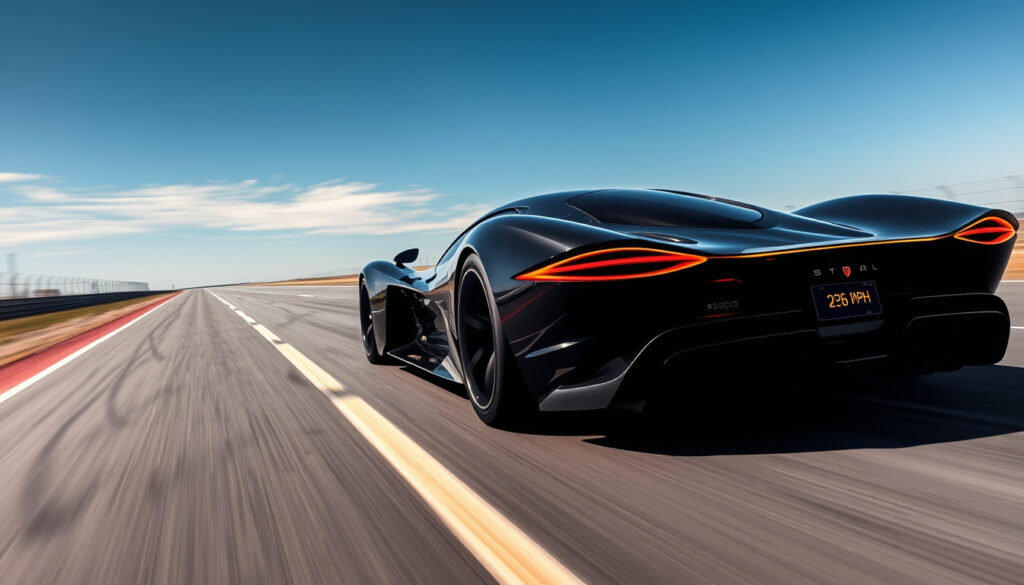
Fastest Car in the World – Official Record and Top Contenders
The pursuit of automotive speed has driven manufacturers to push engineering boundaries for decades. Among production vehicles, one machine currently holds the distinction of being the fastest street-legal car ever verified, according to data compiled through multiple independent sources. Understanding how these records are established, which vehicles have challenged for the title, and what separates a genuine record from marketing claims requires examining the specific criteria that define automotive excellence at the extremes of performance.
The question of which car holds the world speed record attracts intense interest from enthusiasts, industry observers, and potential buyers alike. Manufacturers invest heavily in developing vehicles capable of extraordinary velocities, yet the gap between theoretical capabilities and officially recognized achievements remains significant. This analysis presents verified facts, explains the measurement standards that govern record verification, and outlines the vehicles that have defined this competitive landscape.
What Is the Fastest Car in the World?
The Koenigsegg Agera RS currently holds the verified world record for the fastest street-legal production car, according to Guinness World Records recognition and independent verification processes. This Swedish hypercar achieved a two-way average speed of 277.9 mph (447.19 km/h) during runs conducted on a public highway in Nevada in November 2017. The achievement stands as the benchmark against which all subsequent production car speed claims are measured.
To qualify for the production car speed record, vehicles must meet specific criteria: street legality under U.S. or European homologation standards, a production run of at least 25 units, independent verification by recognized authorities, and a two-way average calculation that accounts for wind resistance and varying conditions.
Current Record Overview
Koenigsegg Agera RS
277.9 mph (447.19 km/h)
2017
Street-Legal Production Car
Key Facts About the Record
- The Agera RS exceeded the previous Bugatti Veyron Super Sport record by approximately 10 mph during its verified runs
- The runs took place on a public Nevada highway, not a closed test track, demonstrating real-world street legality
- Koenigsegg produced more than 25 units of the Agera RS, satisfying the minimum production threshold
- The vehicle features a 5.0-liter twin-turbocharged V8 engine producing 1,160 horsepower on standard pump gasoline
- Driver Oliver Webb completed the qualifying runs, with independent timing equipment validating the results
- Guinness World Records officially recognized the achievement following multi-point verification
Top Verified Street-Legal Production Car Records
| Vehicle | Two-Way Average Speed | Year | Recognized By |
|---|---|---|---|
| Koenigsegg Agera RS | 277.9 mph (447.19 km/h) | 2017 | Guinness World Records |
| SSC Tuatara | 277.87 mph (447.26 km/h) | 2021 | SSC Verified |
| Bugatti Veyron Super Sport | 267.86 mph (431.07 km/h) | 2010 | Guinness World Records |
| SSC Ultimate Aero | 256.14 mph (412.22 km/h) | 2007 | Guinness World Records |
| Hennessey Venom GT | 270.49 mph (one-way only) | 2017 | Not Official |
What Is the Fastest Production Car?
Production car speed records distinguish themselves from concept vehicle or prototype claims by requiring vehicles to exist in meaningful quantities and meet street legal standards. The distinction matters because it separates engineering demonstrations from automobiles that customers can actually purchase, register, and drive on public roads. Koenigsegg’s position as the current record holder reflects both exceptional engineering and compliance with strict verification protocols.
Understanding the SSC Tuatara Position
The SSC Tuatara entered the record conversation in 2021 when the American manufacturer claimed a two-way average exceeding 282 mph. However, subsequent analysis revealed measurement discrepancies. The peak one-way speed reached 282.9 mph, yet the verified two-way average of 277.87 mph falls slightly below the Agera RS mark. GPS measurement errors during the Tuatara’s run led to skepticism about the original claim, with independent experts identifying data logging irregularities that questioned the higher figures.
The Tuatara itself represents a remarkable achievement, powered by an ethanol-fueled 5.9-liter twin-turbocharged V8 producing over 1,750 horsepower. SSC built the vehicle with production intent, though the total number of units produced remains limited. The manufacturer continues to stand by their verification methods while acknowledging the technical debate surrounding the specific measurements.
The difference between the Koenigsegg Agera RS and SSC Tuatara verified records amounts to approximately 0.03 mph—a margin so small that it highlights how precise verification standards determine record rankings. This minimal gap illustrates why standardized measurement protocols exist.
The Bugatti Chiron Super Sport Reality
Bugatti achieved significant attention in 2020 when a modified Chiron Super Sport 300+ reached 304.77 mph during a one-way run. However, this achievement does not qualify for the official production car record because it lacks the required two-way average verification. The vehicle exceeded 300 mph in a single direction on the Ehra-Lessinen test track, a facility owned by Bugatti’s parent company Volkswagen Group.
The distinction matters because one-way runs cannot account for wind resistance, elevation changes, or surface variations that affect actual performance across both travel directions. Bugatti has not pursued the two-way record with the production-spec Chiron, instead focusing on demonstrating the vehicle’s capabilities through controlled high-speed runs.
How Are Car Speed Records Officially Measured?
The methodology for establishing automotive speed records involves specific technical requirements that ensure accuracy and fairness. Understanding these standards helps explain why some announced records face scrutiny while others gain universal acceptance. The two-way average requirement represents the cornerstone of legitimate verification, serving as an international standard across motorsport governing bodies.
The Two-Way Average Standard
When a vehicle attempts a speed record, it must complete runs in opposite directions along the same course. The speeds recorded in each direction are then averaged to produce the final result. This approach accounts for environmental factors including wind direction and speed, slight gradients in the road surface, and variations in tire resistance that occur regardless of vehicle capability. Guinness World Records and the FIA both require this methodology for official recognition.
The mathematics behind two-way averaging reveals why the standard matters practically. A vehicle traveling at 280 mph with a 10 mph headwind experiences significantly different conditions than one traveling at 280 mph with a 10 mph tailwind. The wind assistance in one direction would artificially inflate that run’s speed, making a single direction measurement unreliable for comparing vehicle capabilities across different conditions or locations.
Independence and Equipment Standards
Official record attempts require independent verification involving calibrated timing equipment, documented observation protocols, and often representatives from recognized authorities. The equipment must meet specific accuracy standards, and the measurement methodology must be transparent enough that independent parties could replicate the results. This independence prevents manufacturers from self-certifying performance figures without external oversight.
When evaluating speed record claims, examining the verification body and methodology reveals much about claim reliability. Self-reported manufacturer data without independent verification represents the lowest tier of evidence, while Guinness or FIA recognition indicates the highest level of scrutiny has been applied.
The Production Threshold
For a vehicle to qualify as a production car in speed record terms, manufacturers must typically demonstrate production of at least 25 units meeting the same specifications as the record-setting vehicle. This requirement prevents one-off special constructions from claiming records designed to represent achievable performance. The Agera RS satisfied this threshold with over 25 units produced during its production run, while vehicles like the Hennessey Venom GT, with fewer than the required production numbers, cannot qualify despite impressive performance.
Is the Bugatti Chiron the Fastest Car?
Bugatti occupies a unique position in the hypercar hierarchy despite not currently holding the verified production car speed record. The French manufacturer, now part of the Bugatti-Rimac joint venture following restructuring, has consistently produced some of the world’s fastest and most expensive vehicles. The Chiron family represents the brand’s current lineup, with variants offering different performance specializations.
Comparing Chiron Variants
The Bugatti Chiron lineup includes several variants with distinct performance characteristics. The standard Chiron produces 1,479 horsepower from its quad-turbocharged 8.0-liter W16 engine, while the Sport variant offers enhanced handling dynamics. The Super Sport 300+ represented Bugatti’s attempt at maximum velocity, though its record remains unverified by independent bodies due to the one-way nature of the attempt.
The Pur Sport variant focuses on track capability with aerodynamic optimizations, while the recently announced Tourbillon represents Bugatti’s future direction following the brand’s integration with Rimac. Each variant demonstrates Bugatti’s approach of producing extreme performance within the constraints of street legality, contrasting with manufacturers willing to sacrifice road usability for speed record attempts.
The Bugatti-Koenigsegg Rivalry
The competition between Koenigsegg and Bugatti exemplifies how different engineering philosophies can produce comparable results. Koenigsegg’s smaller scale allows greater focus on innovation, with technologies like the Agera RS demonstrating what focused engineering can achieve. Bugatti’s resources enable extensive development but also require balancing performance with luxury and brand positioning.
The rivalry extends beyond single metrics like top speed, encompassing acceleration times, handling dynamics, and production quality. Both manufacturers have pushed each other to innovate, benefiting consumers seeking the absolute pinnacle of automotive achievement. Their competition has also elevated industry-wide standards for what constitutes a street-legal production vehicle.
Top 10 Fastest Cars in the World
Ranking the world’s fastest vehicles requires acknowledging that different lists emphasize different criteria. Some focus solely on verified top speeds, others include theoretical maximums, and some consider only currently available production vehicles. The following represents verified records recognized by independent authorities, with clear distinctions between confirmed achievements and claimed performance figures.
Established Records
- Koenigsegg Agera RS — 277.9 mph (447.19 km/h) verified two-way average, 2017, Guinness recognized
- SSC Tuatara — 277.87 mph (447.26 km/h) verified two-way average, 2021, manufacturer verified
- Bugatti Veyron Super Sport — 267.86 mph (431.07 km/h) verified, 2010, Guinness recognized
- Hennessey Venom GT — 270.49 mph one-way only, 2017, not officially recognized
- SSC Ultimate Aero — 256.14 mph (412.22 km/h) verified, 2007, Guinness recognized
- Rimac Nevera — 258 mph verified, top electric production vehicle, according to recent data
- Bugatti Chiron Super Sport 300+ — 304.77 mph one-way, 2020, not two-way verified
- McLaren Speedtail — 250 mph claimed, 250+ mph verified for prototype
- Koenigsegg Regera — 255 mph claimed, hybrid powertrain
- Aston Martin Valkyrie — 250 mph claimed, Formula 1-inspired road car
The Yangwang U9 Xtreme by BYD achieved 308 mph (496 km/h) in September 2025 on a German runway, representing the fastest verified production electric vehicle. However, questions remain regarding two-way verification and street legality confirmation, placing it in a category requiring further documentation.
Timeline of Speed Records
The history of automotive speed records reflects broader technological advancement and competitive rivalry across generations. From early attempts using aircraft engines to modern hybrid powertrains, each era has pushed boundaries further while establishing verification standards that separate fact from fiction.
- 1955 — Mercedes-Benz 300 SL achieves 150.7 mph, establishing early production car benchmarks
- 1992 — Jaguar XJ220 reaches 210.5 mph, setting new standards for production vehicles
- 2007 — SSC Ultimate Aero breaks 256 mph, the first American record holder
- 2010 — Bugatti Veyron Super Sport claims 267.86 mph with Guinness recognition
- 2017 — Koenigsegg Agera RS establishes current record at 277.9 mph on Nevada public highway
- 2020 — Bugatti Chiron Super Sport 300+ reaches 304.77 mph one-way, raising questions about future possibilities
- 2021 — SSC Tuatara attempts new record with 282.9 mph peak speed, though verification remains disputed
- 2025 — Yangwang U9 Xtreme achieves 308 mph, potentially redefining electric vehicle capabilities
What Is Verified Versus What Remains Unclear
Separating confirmed achievements from aspirational claims requires examining the evidence supporting each assertion. Several vehicles have generated significant attention while remaining outside recognized verification frameworks, creating confusion among enthusiasts seeking accurate information.
| Established Information | Information Requiring Further Verification |
|---|---|
| Agera RS two-way average: 277.9 mph (2017) | Yangwang U9 Xtreme two-way verification status |
| Tuatara verified two-way average: 277.87 mph | Czinger 21C production and verification claims |
| Veyron Super Sport record: 267.86 mph (2010) | Jesko Absolut real-world performance against 330 mph theoretical claim |
| Rimac Nevera verified: 258 mph | Hennessey Venom F5 production timeline and verification status |
| Chiron Super Sport 300+ one-way: 304.77 mph | Bugatti Bolide street legality classification |
How Manufacturers Pursue Speed Records
The engineering required to exceed 250 mph in a production vehicle involves every aspect of automotive design. Aerodynamics, powertrain output, tire technology, structural rigidity, and cooling systems must all function at levels far beyond ordinary vehicles. Understanding these requirements explains why genuine high-speed capability remains limited to specialized manufacturers.
Koenigsegg’s approach with the Agera RS demonstrates how focused engineering can overcome resource disadvantages against larger manufacturers. The Swedish company invested heavily in aerodynamic testing and powertrain development specifically for the speed record attempt, leveraging their smaller scale to move quickly on technical decisions that larger organizations would require extended approval processes to implement.
Future Challengers
Several upcoming vehicles may challenge the current record in coming years. The SSC Tuatara continues to generate discussion despite verification debates, while Koenigsegg’s Jesko Absolut carries theoretical targets of 330 mph without confirmed real-world demonstration. The Hennessey Venom F5 and Czinger 21C also appear in discussions of potential record-breaking vehicles, though production timelines and verification status remain uncertain.
Electric vehicles represent an emerging category with potential for extreme performance. Current lithium-ion battery technology presents challenges for sustained high-speed operation due to heat generation and energy demand, but continued advancement may enable future EVs to challenge internal combustion vehicles at the upper echelons of speed records.
Sources and Official Recognition
The verification of automotive speed records relies on established authorities and transparent methodologies. Guinness World Records maintains specific requirements for production car speed attempts, while the FIA provides additional regulatory frameworks for motorsport-adjacent achievements. These organizations’ involvement ensures consistent standards across manufacturers and time periods.
The Koenigsegg Agera RS has been officially recognized as the fastest road-legal production car following our comprehensive verification process, which included independent timing equipment, course measurements, and environmental condition documentation.
— Guinness World Records verification statement
Manufacturers like Koenigsegg, Bugatti, and SSC have each contributed documentation supporting their respective positions, though independent verification processes ultimately determine official recognition. The methodology requires transparency regarding vehicle specifications, run conditions, and measurement equipment, allowing experts to evaluate claims against established standards.
Summary
The Koenigsegg Agera RS holds the distinction of being the fastest verified street-legal production car with a two-way average speed of 277.9 mph, a record established in 2017 and recognized by Guinness World Records. This achievement represents the current benchmark against which all production vehicle speed claims are measured, though ongoing competition from manufacturers including SSC, Bugatti, and emerging electric vehicle producers suggests the record may face future challenges.
Understanding the distinction between verified records and marketing claims requires familiarity with the two-way average methodology, production threshold requirements, and independent verification standards. Vehicles like the SSC Tuatara, while impressive in their own right, have not displaced the Agera RS through verified measurements accepted by authoritative bodies. Similarly, one-way runs like the Bugatti Chiron Super Sport 300+’s 304.77 mph demonstration, while remarkable, do not qualify for official records due to verification methodology differences. Those interested in exploring related performance topics may find value in examining the Used Range Rover for Sale – Best Years, Prices and Tips for practical considerations in high-end vehicle acquisition, or the Motorola Edge 50 Pro – Full Review, Specs and Verdict for technology evaluation approaches applicable across industries.
Frequently Asked Questions
What is the fastest electric car?
The Yangwang U9 Xtreme by BYD achieved 308 mph (496 km/h) in September 2025, making it the fastest verified production electric vehicle. However, its street legality and two-way verification status remain under review, placing it in a category requiring further confirmation.
How is the fastest car record measured?
Official records require a two-way average speed, meaning a vehicle must complete runs in opposite directions along the same course. The speeds from both runs are averaged to produce the final result, accounting for wind and environmental factors.
Why don’t one-way speed runs count for records?
One-way runs cannot account for wind assistance or resistance, road gradients, or other directional factors that affect true vehicle capability. A single direction measurement might be artificially inflated or reduced by conditions, making two-way averaging essential for fair comparison.
Is the SSC Tuatara faster than the Koenigsegg Agera RS?
The SSC Tuatara’s verified two-way average of 277.87 mph falls slightly below the Agera RS record of 277.9 mph. The Tuatara’s peak one-way speed reached 282.9 mph, but GPS measurement errors have led to questions about the higher claimed figures.
What vehicles have claimed faster speeds without verification?
Several vehicles claim higher speeds without qualifying for official records. The Koenigsegg Jesko Absolut targets 330 mph theoretically without a verified run. The Hennessey Venom F5 claims 311 mph unverified, while the Bugatti Bolide’s 310 mph estimate involves track-only specifications.
What does street-legal mean for speed records?
Street-legal vehicles meet regulatory requirements for operation on public roads in the United States or Europe, including lighting, emissions, safety equipment, and documentation. This distinguishes production vehicles from track-only specials or one-off prototypes.
How many units must a car have to qualify for production records?
Most record organizations require at least 25 units meeting the same specifications as the record-setting vehicle. This prevents one-off special constructions from claiming records designed to represent achievable production performance.
Who holds the Guinness record for fastest production car?
Guinness World Records recognizes the Koenigsegg Agera RS at 277.9 mph (447.19 km/h), verified on November 4, 2017. The official recognition followed comprehensive independent verification including timing equipment calibration, course measurement, and environmental condition documentation.
More related posts
 M&S Advent Calendar 2025 – Price, Contents and Expert Review
 When Do Clocks Go Forward – 2025 UK Dates and Guide
 Aj Shabeel – Biography, Age, Family and Career Facts
 Swimming Shorts – Ultimate Guide for Men, Women & Kids 2025
 Help to Save Sign In – Secure GOV.UK Login Guide
 Avatar Fire and Ash – Complete Guide to Post-Korra Comic
 How to Stay Safe Online – 15 Essential Tips for Everyone
 In the Night Garden Toys – Availability Guide 2025
