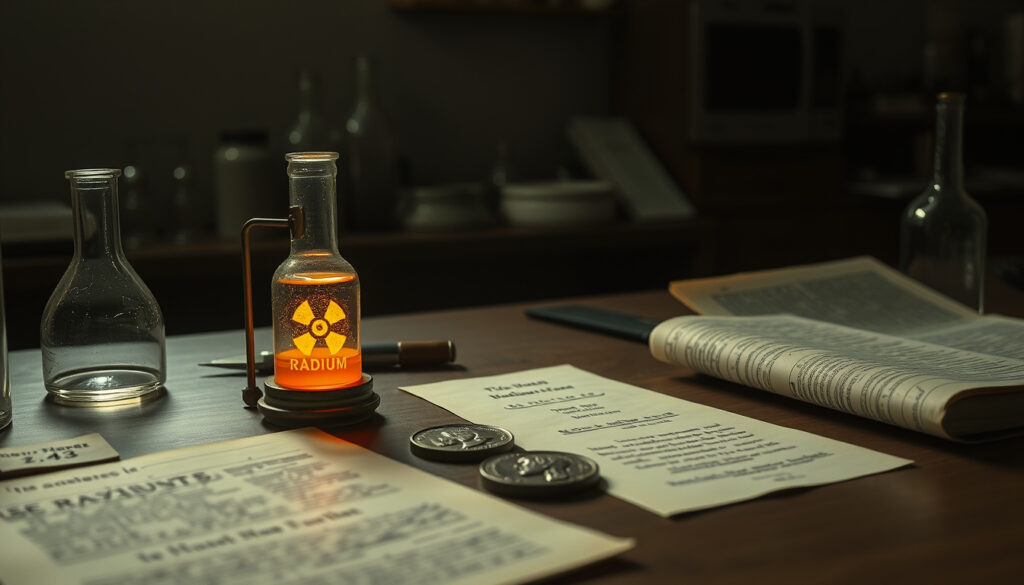
Marie Curie – Discoveries, Life and Lasting Legacy
Marie Curie remains one of the most influential scientists in history. Her pioneering research on radioactivity led to the discovery of two new elements, earned her two Nobel Prizes, and laid the groundwork for modern cancer treatment. Born in Poland and later naturalized as a French citizen, her life was marked by extraordinary scientific achievement and personal sacrifice.
Curie’s work fundamentally changed the understanding of atomic physics and chemistry. She isolated pure radium, helped establish radioactivity as a distinct scientific field, and her discoveries directly shaped the development of radiology and radiation therapy. Her death in 1934 from aplastic anemia was directly linked to the prolonged radiation exposure she endured during her research and her work with X-ray units during World War I.
Beyond her scientific contributions, Curie’s legacy includes the Institut Curie in Paris, a world-leading cancer research center, and the Marie Curie charity in the UK, which provides end-of-life care. She remains a global icon for women in science and a symbol of relentless curiosity.
What Were Marie Curie’s Greatest Discoveries and Inventions?
Two Nobel Prizes
Physics (1903), Chemistry (1911)
Discoveries
Polonium and Radium
Born
Warsaw, Poland, Nov 7, 1867
Legacy
Institut Curie, Marie Curie Charity
Key Insights
- Only person to win Nobel Prizes in two different sciences.
- Her work laid the foundation for modern cancer radiotherapy.
- The Marie Curie charity provides end-of-life care to thousands in the UK.
- She died of aplastic anemia caused by prolonged radiation exposure.
Snapshot Facts
| Field | Detail |
|---|---|
| Full name | Marie Salomea Skłodowska Curie |
| Born | Nov 7, 1867, Warsaw, Poland |
| Died | July 4, 1934, Sancellemoz, France |
| Known for | Pioneering research on radioactivity |
| Spouse | Pierre Curie (m. 1895) |
| Children | Irène Joliot-Curie, Ève Curie |
| Nobel Prizes | Physics 1903, Chemistry 1911 |
| Major discovery | Polonium, Radium |
| Charity / Institution | Institut Curie / Marie Curie (UK charity) |
Marie Curie and her husband Pierre Curie discovered polonium and radium in 1898. This breakthrough came from their systematic study of uranium ore, which they found to be far more radioactive than its uranium content could explain. The isolation of pure radium followed, a painstaking process that took years of work in a poorly equipped shed.
Her 1903 Nobel Prize in Physics was shared with Pierre Curie and Henri Becquerel for their collective research on radiation phenomena. In 1911, she won the Nobel Prize in Chemistry for the discovery of radium and polonium and the isolation of radium. She was the first woman to win a Nobel Prize, the first person to win two Nobel Prizes, and remains the only person to have won Nobel Prizes in two different scientific fields.
Curie earned her PhD in physics from the University of Paris in 1903, basing her thesis on the discovery of radium and her research on radioactivity. Her doctoral work was itself a landmark achievement that helped define a new scientific discipline.
Curie’s discovery of radioactivity opened entirely new fields in physics and chemistry, leading to nuclear physics and medical imaging. Her work helped shape radiology, radiation therapy, and modern cancer treatment.
What Life Events Defined Marie Curie?
Where Was Marie Curie Born?
Marie Curie was born on 7 November 1867 in Warsaw, in what was then Russian-ruled Poland. She was the youngest of five children. Her father was a mathematics and physics teacher, which likely influenced her early interest in science.
Who Was Marie Curie’s Husband?
Marie Curie met Pierre Curie while studying at the Sorbonne in Paris. They married in 1895 and became scientific partners, working closely together on the research that led to the discovery of polonium and radium. Pierre Curie died in a street accident in Paris in 1906. After his death, Marie Curie became the first female professor at the University of Paris / Sorbonne.
Who Was Marie Curie’s Daughter?
Marie Curie had two daughters: Irène Joliot-Curie and Ève Curie. Irène continued the family’s scientific tradition and, along with her husband Frédéric Joliot-Curie, won the 1935 Nobel Prize in Chemistry for the discovery of artificial radioactivity. The Curie family legacy includes five Nobel Prizes across multiple generations.
As a woman in 19th and early 20th century science, Curie overcame immense institutional barriers. She became a global icon for women in STEM, and her success helped pave the way for future generations of female scientists and academics.
How Did Marie Curie Die and What Is Her Lasting Legacy?
What Did Marie Curie Die Of?
Marie Curie died on 4 July 1934 at the Sancellemoz Sanatorium in Passy, France, at the age of 66. Her death was recorded as aplastic pernicious anemia / aplastic anemia, widely attributed to prolonged exposure to radiation during her research and wartime X-ray work. Sources note that her health was affected by repeated radiation exposure over many years.
What Is the Marie Curie Charity?
The UK charity Marie Curie takes its mission from her scientific legacy, especially the use of radiation and her wider impact on care for serious illness. Its history page explicitly links its inspiration to Curie’s discovery of radium and polonium. The charity provides end-of-life care and support, operating hospices and home care services, and also funds palliative care research.
What Is the Institut Curie?
The Institut Curie is a major French cancer research and treatment institution built around the scientific and medical applications of radioactivity. Curie’s research and medical legacy are closely associated with this institute, which continues to be a world leader in cancer research and patient care.
While the history of early overuse of radium in medicine is clear, there is some uncertainty about the long-term effects on early patients, as these were not fully tracked. The environmental impact of radium in early medical applications remains a subject of historical study.
Popular Books and Movies About Marie Curie
Several films and books have been produced about Marie Curie’s life. A 2025 biopic titled “Marie Curie: The Courage of Knowledge” and the 1943 film “Madame Curie” are among the most notable. Readers interested in detailed recommendations may wish to consult dedicated film and literature databases.
Timeline of Marie Curie’s Life
- 1867: Born in Warsaw, Poland.
- 1891: Moved to Paris to study at the Sorbonne.
- 1895: Married Pierre Curie.
- 1898: Discovered polonium and radium with Pierre.
- 1903: Won Nobel Prize in Physics with Pierre Curie and Henri Becquerel.
- 1906: Pierre Curie died; Marie later became professor at the University of Paris.
- 1911: Won Nobel Prize in Chemistry.
- 1934: Died of aplastic anemia.
- 1940s-present: Institut Curie continues research; Marie Curie UK charity founded.
What Is Certain and What Remains Unclear About Marie Curie’s Life?
| Topic | Established Information | Information That Remains Unclear |
|---|---|---|
| Cause of death | High — aplastic anemia linked to radiation exposure is medically established. | Some speculation about other contributing health factors exists but is largely historical. |
| Extent of Pierre Curie’s contribution | Very high — jointly credited, shared Nobel, well documented. | No major controversy, though some attribution debates existed in the early 1900s. |
| Environmental impact of radium in early medicine | History is clear about early overuse. | Long-term effects on early patients not fully tracked. |
What Is the Broader Context of Marie Curie’s Work?
Curie’s work laid the foundations for modern radiology, nuclear physics, and cancer treatment. The term “curie” was adopted as an international standard unit for radioactive emissions in honor of Marie and Pierre Curie. Her discoveries opened entirely new fields in physics and chemistry, leading to nuclear physics and medical imaging.
As a woman in 19th and 20th century science, Curie overcame immense institutional barriers, becoming a global icon for women in STEM. The Institut Curie continues cancer research, and the UK charity provides end-of-life care, bridging scientific and humanitarian contributions.
Sources and Quotes
“Nothing in life is to be feared, it is only to be understood.”
Attributed to Marie Curie
“I am among those who think that science has great beauty.”
Marie Curie, 1921
Key sources for this article include the official biography on NobelPrize.org, the Wikipedia article on Marie Curie, the Institut Curie’s legacy page, the Marie Curie UK Charity website, and the DPMA article on Marie Curie (2025).
Summary: What Is the Lasting Significance of Marie Curie?
Marie Curie’s life and work represent a unique combination of groundbreaking scientific discovery, personal resilience, and enduring humanitarian impact. Her research on radioactivity fundamentally changed physics and medicine, while the institutions she inspired continue to save lives. For more on the lives of other influential figures, see How Did Steve Irwin Die.
Frequently Asked Questions
What is the Marie Curie charity?
A UK-based charity providing end-of-life care and support, operating hospices and home care services. It also funds palliative care research.
Is there a Marie Curie movie?
Yes — several films exist, including the 2025 biopic “Marie Curie: The Courage of Knowledge” and the 1943 “Madame Curie”. Check streaming platforms for current versions.
Did Marie Curie have a PhD?
Yes — she earned her PhD in physics from the University of Paris in 1903, basing her thesis on the discovery of radium and her research on radioactivity.
What is the Institut Curie?
A French research and medical institute founded by Marie Curie in 1921, now a world leader in cancer research and patient care.
How many children did Marie Curie have?
She had two daughters: Irène Joliot-Curie (also a Nobel Prize-winning scientist) and Ève Curie (a writer and diplomat).
More related posts
 Best Time to Post on TikTok – Data-Driven Guide for 2025
 Darts Order of Play – PDC Schedules, TV Guide and Live Scores
 Kylie Page – Died from Cocaine and Fentanyl Overdose
 Francesca Annis – Biography, Career, and Iconic Roles
 Jeans Woman – Compare Zara, H&M, M&S and Stradivarius 2025
 What Doe the Pancrea Do – Function , Location, and Health Tip
 Titanic Deluxe Golf Belek – Complete 2025 Guide
 Is Sky Mobile Down – Live Service Status & Outage Map
