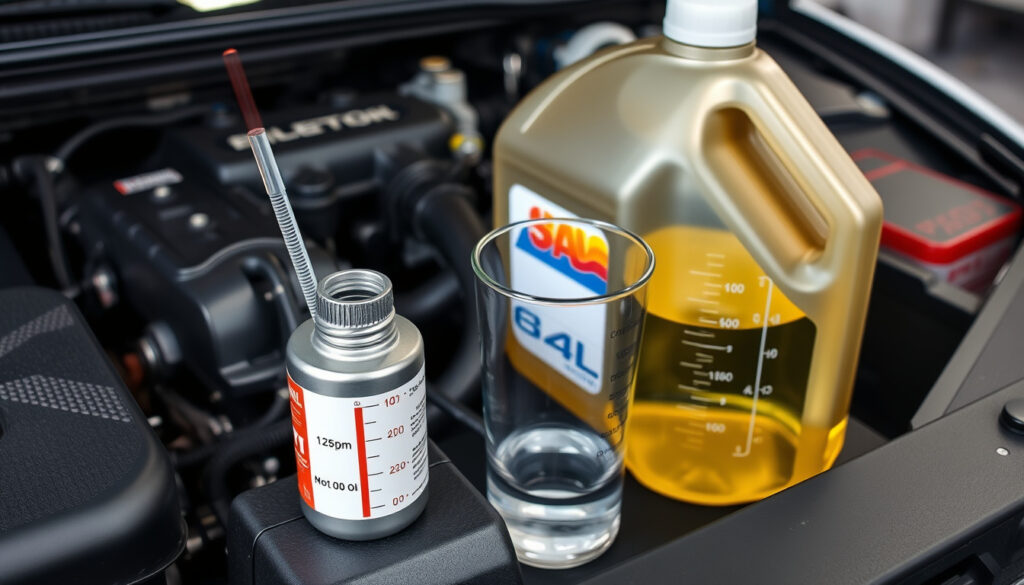
How Much Oil Does My Car Need – Complete UK Capacity Guide
Knowing exactly how much oil your car needs is one of the most basic yet critical aspects of vehicle maintenance. The answer depends on engine size, design, and manufacturer specifications—not guesswork. This guide explains how to find the precise oil capacity and type for your car, using reliable tools and methods available to UK drivers.
Most passenger cars require between 4 and 6 litres of oil, but this varies widely. A small city car may take as little as 3.5 litres, while a large SUV or performance vehicle can need up to 8 litres. Using the correct volume is just as important as using the right oil type—both are essential for engine longevity and efficiency.
The challenge for many drivers is that oil capacity is not always easy to find at a glance. Registration lookups, owner manuals, and online databases all offer answers, but knowing which source to trust and how to interpret the information makes the difference between a successful top-up and a costly mistake.
How Much Oil Does My Car Need? (Exact Capacity)
| Question | Quick Answer | Key Action |
|---|---|---|
| How much oil? | Check owner manual or use reg lookup. Average 4–6 litres. | Use free online capacity chart or calculator. |
| What oil? | 5W-30 or 0W-20 typical. Use manufacturer spec. | Find by reg or VIN. |
| When to check? | Cold engine, flat ground, after 5 minutes off. | Check monthly. |
| How to change? | Drain old oil, replace filter, fill to spec. | Follow step-by-step guide. |
Key Insights About Car Oil Capacity
- Most modern cars require between 4 and 6 litres of oil; small engines take roughly 3.5 litres, large engines up to 8 litres.
- Using the wrong oil type, such as 10W-40 instead of 5W-30, reduces fuel economy and engine life in modern engines.
- Checking oil level is best done cold; checking hot can give a false reading due to thermal expansion.
- Overfilling oil is as damaging as low oil because it increases pressure and causes foaming.
- UK cars built from 2010 onward overwhelmingly use 5W-30 or 0W-20 fully synthetic oil.
Car Oil Capacity at a Glance
| Parameter | Typical Value / Guidance |
|---|---|
| Typical oil capacity (small car) | 3.5 – 4.5 litres |
| Typical oil capacity (saloon/SUV) | 5.0 – 7.0 litres |
| Most common oil type (UK) | 5W-30 Fully Synthetic |
| Check frequency | Monthly |
| Oil change interval | Every 10,000 – 15,000 miles or 1 year |
| Consequence of low oil | Engine wear, overheating, seizure |
| Consequence of overfilling | Foaming, leaks, engine damage |
What Oil Does My Car Take? (Type & Viscosity)
What oil should I put in my car?
The oil type is determined by the engine manufacturer, not personal preference. Most modern petrol and diesel engines in the UK require fully synthetic 5W-30 or 0W-20 oil. These low-viscosity oils improve fuel economy and protect variable valve timing systems and turbochargers. Using a thicker oil like 10W-40 in an engine designed for 5W-30 can lead to poor cold-start performance and increased wear over time.
How do I find the correct oil for my car registration?
Registration lookup tools from major brands provide personalised recommendations. The Castrol oil selector lets you enter make, model, and year or registration number. The Mobil motor oil finder offers similar functionality. Halfords oil finder is a trusted UK retail option. These tools are accurate for most vehicles from 2005 onward, but may not cover imports or heavily modified cars.
What do oil grades like 5W-30 mean?
The first number (5W) indicates the oil’s viscosity in cold temperatures—the lower the number, the better it flows in winter. The second number (30) represents viscosity at operating temperature. A 5W-30 oil remains fluid enough for cold starts but thickens enough at high temperatures to maintain a protective film. Thicker oils like 10W-40 were common in older engines but are rarely specified in modern UK vehicles.
If your owner manual is missing, look for the oil filler cap under the bonnet. Many manufacturers stamp the recommended viscosity directly on the cap. This is a quick check before buying oil.
How Much Oil for an Oil Change? (Step-by-Step Guide)
Do I need to buy extra oil for the filter change?
Yes. The oil capacity listed in your owner manual typically includes the oil needed for the filter. When you replace the oil filter during a change, the new filter absorbs some oil, which is why you should always fill to the specified capacity and then check the dipstick. Some vehicles list two capacities: one for a filter change and one for a dry fill (after engine rebuild). Always use the figure that includes the filter if you are changing both oil and filter.
Should I measure oil after the engine is warm?
Oil expands when hot, so checking the level immediately after driving can give a false reading. The most reliable method is to check when the engine is cold and the car is parked on level ground. If you must check after a drive, wait at least five minutes for the oil to settle back into the sump. The dipstick markings are calibrated for a cold or fully settled engine.
Some cars have separate figures for “dry fill” and “with filter change.” The difference can be 0.5–1 litre. Always confirm which figure applies to your situation before pouring.
How to Check Your Car’s Oil Level Correctly
When should you check the engine oil level?
The best practice is to check the oil level once a month and before any long journey. Regular checks help spot leaks or excessive consumption early. Many modern cars include a low-oil warning light, but relying solely on that is risky—by the time the light comes on, the level may already be critically low.
How to check car oil accurately?
Park on a flat surface, switch off the engine, and wait a few minutes. Pull out the dipstick, wipe it clean, reinsert it fully, then pull it out again. The oil film should sit between the lower and upper marks. If it is at or below the lower mark, top up using the correct oil type. Do not fill above the upper mark.
Should the car be hot or cold when checking oil?
Cold is more reliable. When the engine is hot, oil expands and may give a reading higher than the true level. If the engine has been running, wait at least five minutes after switching off to allow oil to drain back into the sump. Always follow the procedure described in your owner manual, as some manufacturers have specific recommendations for their engines.
Adding too much oil causes the crankshaft to churn the oil into foam, which reduces lubrication pressure. This can lead to overheating, seal leaks, and engine damage. Never add oil beyond the upper dipstick mark.
How Often to Change Oil in Your Car
Changing oil in a car: How often is recommended?
Most manufacturers recommend an oil change every 10,000 to 15,000 miles or once a year, whichever comes first. Some modern cars with long-life synthetic oils can extend intervals to 18,000 miles or two years under normal driving conditions. Short trips, frequent cold starts, and towing place extra stress on oil and may require more frequent changes.
Does modern synthetic oil last longer?
Yes. Fully synthetic oils are engineered to resist thermal breakdown and oxidation far longer than conventional mineral oils. They also flow better at low temperatures and maintain film strength at high temperatures. Most UK cars manufactured after 2010 are designed around synthetic oil, which is why 5W-30 and 0W-20 have become the standard recommendations.
How Has Engine Oil Knowledge Evolved Over Time?
- Pre-2000s: Drivers relied on the dipstick and owner manual. Standard oils were 10W-40 mineral or semi-synthetic. Online resources did not exist.
- 2000–2010: A shift toward thinner 5W-30 oils began. Online tools from brands like Castrol and Mobil started appearing, offering basic vehicle lookups.
- 2010–2020: Registration lookup tools became standard across major oil brands. Fully synthetic oils dominated the market. Capacity databases like AUTODOC gained popularity.
- 2020–2025: OBD-based capacity data and mobile app integration emerged. Electric vehicle adoption began reducing the relevance of traditional oil queries for new car buyers.
- 2025+: AI-driven instant oil type and volume identification via photo or VIN scan is expected to become mainstream, further simplifying the process for drivers.
What Information About Oil Capacity Is Certain and What Is Less Clear?
| Established Information | Information That Remains Unclear or Variable |
|---|---|
| Your owner manual contains the definitive oil capacity and type. | Capacity charts may vary by 0.5–1 litre due to optional oil coolers or filter size differences. |
| Online registration tools identify oil type with 95%+ accuracy for cars from 2005 onward. | Registration lookups may fail for imported or modified vehicles. |
| Using the exact oil viscosity specified by the manufacturer is always correct. | Dipstick readings can be unclear if the oil is hot or the car is parked on uneven ground. |
| Some cars list separate “dry fill” and “with filter change” capacities that differ. |
Why Does Oil Capacity Vary Between Cars?
Engine size is the primary factor. A 1.0-litre three-cylinder engine holds far less oil than a 4.0-litre V8. But engine design also plays a role: the shape of the oil pan, the presence of an oil cooler, and the size of the oil filter all influence total capacity. Two cars with the same engine size from different manufacturers may require different oil volumes. This is why generic answers like “5 quarts for a 4-cylinder” are only rough guidelines—they are not reliable for any specific vehicle.
The user profile for this question is typically a UK driver aged 25–55, not a professional mechanic, who is performing their own oil change or top-up. They need clear, actionable information that does not assume prior technical knowledge. Online searches are often dominated by brand-sponsored product finders, which are excellent for identifying oil type but offer limited or tool-dependent answers about exact volume.
Which Sources Should You Trust for Oil Capacity Information?
“Search by model or registration for tailored recommendations.”
— Castrol Product Finder
“Use our oil finder tool to find out which engine oil your car needs.”
— Halfords
“Always refer to your vehicle owner’s manual for exact capacity.”
— AAA
The AUTODOC oil capacity chart provides specific litre values for thousands of models, making it a useful reference after you have identified your vehicle. The GOV.UK MOT history service can confirm your vehicle’s exact specification, which helps when cross-referencing oil data. No single source covers everything—combining a registration lookup with your manual and a verified chart gives the most reliable result.
What Should You Remember About Your Car’s Oil Capacity?
The exact oil capacity for your car depends on its engine size, design, and manufacturer specifications. General rules suggest 4 to 6 litres for most passenger cars, but the only way to be certain is to check your owner manual or use a trusted registration lookup tool. Combine that with the correct oil type—typically 5W-30 or 0W-20 for modern UK cars—and check the level monthly. For a full reference, see our dedicated car oil capacity guide for detailed capacity data across popular models.
Frequently Asked Questions
How much oil does my car need by reg?
Use any major brand’s registration lookup tool, such as Castrol, Mobil, or Halfords. They output the exact oil type and typically include a capacity range for your vehicle.
How much oil does my car need calculator free?
Yes, free calculators are available at AUTODOC and on brand websites. Enter your vehicle’s make, model, and engine size to receive the capacity in litres.
Can I use 10W-40 instead of 5W-30?
In most modern UK cars, no. 5W-30 is required for cam chains and sensitive variable valve timing systems. Check your owner manual before switching.
What happens if I put the wrong oil in my car?
Short term: reduced fuel economy and rough running. Long term: sludge buildup and accelerated engine wear. Always use the specified viscosity and grade.
Do I need to change oil filter every time?
Yes, always replace the oil filter when changing oil. A used filter contains old oil and contaminants that will immediately degrade the new oil.
More related posts
 Firework Displays Near Me – UK Bonfire Night Guide 2025
 VO2 Max by Age – Complete Norms, Decline & Improvement Tips
 Open Business Account Online – Best UK Providers Compared
 Brown Brothers Death Notices – Belfast Obituaries Guide
 Mumbai Indians Vs Gujarat Titans Match Scorecard – H2H Stats
 Percussion Instrument Crossword Clue – Answers by Length
 Andy Murray Next Match – Retired After 2024 Olympics
 In the Night Garden Toys – Availability Guide 2025
