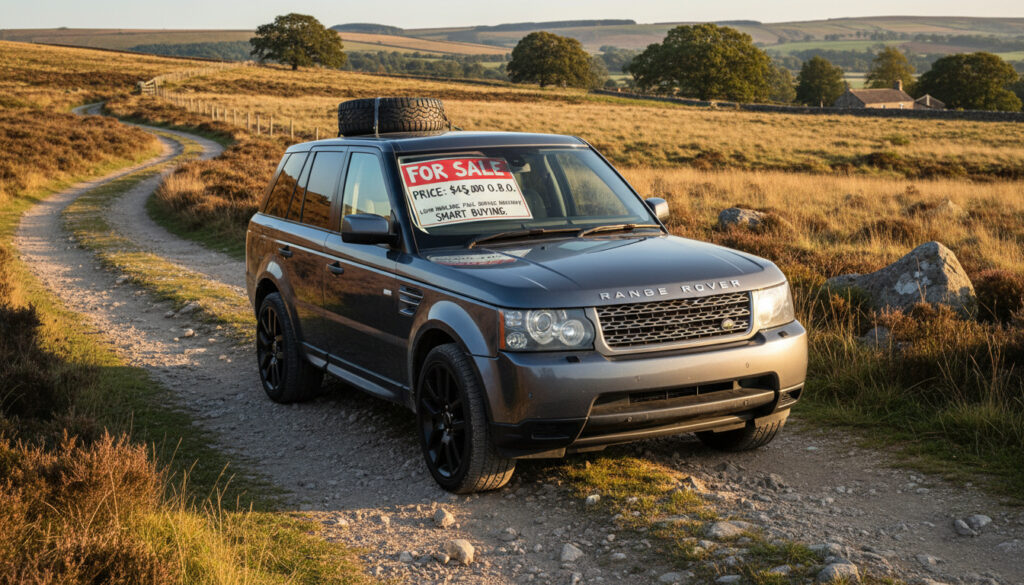
Used Range Rover for Sale – Best Years, Prices and Tips
The used Range Rover market offers luxury SUV prestige at depreciated prices, with listings spanning from $10,000 for older third-generation models to over $135,000 for recent fifth-generation examples. Buyers navigate a complex landscape where British off-road capability meets questionable long-term reliability ratings and steep maintenance demands.
While the brand commands attention for its refined interiors and terrain response systems, prospective owners face annual maintenance costs averaging $1,258—nearly double the $652 industry standard according to RepairPal data. Understanding which model years offer relative dependability versus financial risk proves essential before visiting dealerships, independent lots, or private sellers.
This guide examines current inventory channels, pricing structures across generations, and critical inspection points based on aggregated repair data and specialist recommendations from CarGurus and CarParts.com analyses.
Where Can I Find Used Range Rovers for Sale?
| Average Price Range $10,000–$135,000 |
Most Reliable Era 2007–2009 (Third Gen) |
Key Segments Full-Size, Sport, Velar |
Primary Sources CarGurus, Autotrader, CPO Official |
- Third-generation models (2003–2012) represent the most reliable used option according to repair records and owner reports
- Certified Pre-Owned vehicles carry warranty advantages worth the premium on 2020 and newer models
- Private sales offer lower initial costs but require thorough documentation verification and specialist inspection
- Depreciation hits 63% within five years from new MSRP, creating entry opportunities alongside financial risks
- Air suspension failures constitute the most expensive common repair across all generations
- Insurance companies frequently refuse coverage or charge elevated premiums due to theft susceptibility and repair complexity
| Generation | Years | Price Range | RepairPal Reliability | Primary Risk Factor |
|---|---|---|---|---|
| Second Gen (P38A) | 1995–2002 | $12,000–$18,000 | 2.0/5.0 | Severe electrical faults, rust |
| Third Gen (L322) | 2003–2012 | $10,000–$25,000 | Above average for brand | Air suspension failure |
| Fourth Gen Early (L405) | 2013–2016 | <$24,000–$30,000 | Below average | Infotainment glitches |
| Fourth Gen Late (L405) | 2017–2019 | $38,000–$60,000+ | 73/100 (J.D. Power) | Complex electronics |
| Fifth Gen (L460) | 2020–2022 | $60,000–$135,000 | 72/100 (J.D. Power) | High repair costs |
| Fifth Gen Current | 2022+ | $60,000–$135,000+ | Unestablished | Limited long-term data |
How Much Does a Used Range Rover Cost?
Pricing varies dramatically by generation, mileage, and service history. The third-generation Range Rover (2003–2012) offers the most accessible entry point, with clean examples available between $10,000 and $25,000. Supercharged V8 variants under 80,000 miles often surface around $15,000, though these require careful inspection of air suspension components and cooling systems.
What Do Later Generations Command?
Fourth-generation models (2013–2016) typically trade under $30,000 when showing fewer than 80,000 miles. The 2017–2019 facelift examples command $38,000 to $60,000 depending on trim level, with Autobiography variants exceeding $60,000. Fifth-generation vehicles (2020–2022) retain strong values between $60,000 and $135,000, reflecting their recent release and advanced aluminum architecture.
How Does Depreciation Affect Value?
Used Range Rovers depreciate approximately 63% within five years from an average new price of $151,793. This steep depreciation creates entry opportunities below $25,000 but masks ongoing maintenance costs that owner surveys indicate can reach $3,000 annually for high-mileage examples.
What Is the Best Used Range Rover Model to Buy?
Specialist consensus identifies the third-generation Range Rover, specifically 2007–2009 model years, as the optimal used purchase. These benefit from mid-cycle reliability improvements while avoiding the earliest BMW-engine complexities and the latest electronic over-complications.
Which Years Offer the Best Balance?
The 2007–2009 models represent the reliability sweet spot within the third generation, offering refined Jaguar-derived V8 engines with fewer electrical foibles than later iterations. These years preceded the 2010+ introduction of more complex infotainment and terrain management systems that increased failure points.
Are Newer Generations Viable?
2013–2016 fourth-generation models provide modern aluminum construction and supercharged V6 options under $30,000, though Consumer Reports gave the 2020 model a predicted reliability score of 1/5. Avoid 1995–2002 second-generation models despite their low $12,000–$18,000 pricing; these suffer from chronic electrical failures, air suspension deterioration, and corrosion issues that exceed their purchase value in repair costs.
Are Used Range Rovers Reliable and Costly to Maintain?
Range Rovers rank consistently low in reliability surveys. RepairPal scores the brand 2.0/5.0, placing it 15th of 19 luxury full-size SUVs. J.D. Power ratings hover between 72 and 73 out of 100 for 2015–2021 model years, suggesting marginal dependability even in newer examples.
What Failures Occur Most Frequently?
Air suspension systems fail commonly across all generations, requiring expensive compressor and strut replacements. Electrical issues including infotainment glitches, battery drain, power lock malfunctions, and ABS faults persist through model years. Transmission faults, oil leaks, and differential problems plague higher-mileage V8 variants.
What Are the True Ownership Costs?
CarMax and Autotrader data confirm a 19% probability of severe repairs annually, with vehicles visiting shops 0.6 times per year on average. Annual maintenance averages $1,258 compared to $652 industry-wide, with some owners reporting yearly expenditures approaching $3,000.
Why Are Insurance Costs Elevated?
Some insurers refuse coverage or charge substantial premiums for Range Rovers due to high theft rates in certain markets and the expense of aluminum body repairs. Prospective buyers should secure insurance quotes before purchasing, particularly for fifth-generation models with limited aftermarket parts availability.
How Have Range Rover Generations Evolved?
- 1995–2002 (P38A): Second generation introduced advanced electronic air suspension for its era but suffered from chronic electrical gremlins and resale value collapse. Available for $12,000–$18,000 only if meticulously maintained.
- 2003–2012 (L322): Third generation debuted BMW-derived architecture before switching to Jaguar engines. The 2007–2009 facelift models offer the most robust repair records and best value proposition at $10,000–$25,000.
- 2013–2021 (L405): Fourth generation adopted all-aluminum monocoque construction, reducing weight but increasing repair complexity. J.D. Power scores peaked at 73/100 during this era, though electronic systems proved problematic.
- 2022–Present (L460): Fifth generation rides on the new MLA-Flex platform with mild hybrid standard powertrains. Limited used market data exists, with prices ranging from $60,000 to $135,000.
Is Buying a Used Range Rover Worth the Risk?
| Established Facts | Uncertain Information |
|---|---|
| Third-generation 2007–2009 models demonstrate superior repair records compared to other eras | Long-term reliability of 2022+ fifth-generation models remains unproven due to limited data |
| Annual maintenance averages $1,258; severe repair probability stands at 19% | Exact repair costs for specific high-mileage examples vary widely by region and service history |
| Air suspension failure affects all generations with predictable frequency | Whether 2017+ reliability improvements persist beyond 100,000 miles |
| Certified Pre-Owned programs add warranty value worth the premium on 2020+ vehicles | Future parts availability for discontinued supercharged V8 engines |
| Depreciation reaches 63% within five years from original MSRP | Insurance market stability and theft rate trends for specific metropolitan areas |
Why Do Range Rovers Depreciate So Rapidly?
The steep depreciation curve stems from the collision of luxury expectations with mechanical reality. As vehicles age, the probability of air suspension failure, electrical malfunctions, and engine cooling issues rises exponentially. When repair estimates approach or exceed remaining vehicle value at $10,000–$15,000 price points, owners sell rather than fix, flooding the market with problematic units.
Compared to competitors like the Apple MacBook Air M4 specs and price ecosystem—where depreciation follows predictable technological obsolescence—Range Rover depreciation reflects mechanical risk. Buyers seeking luxury SUVs with lower ownership costs might consider alternatives like the Lexus GX, though these sacrifice the Range Rover’s distinctive design and off-road pedigree.
What Do Industry Experts Report?
“The third-generation Range Rover, particularly 2007-2009 models, is the most reliable used option with the fewest complaints, though all models face high maintenance costs.”
— CarGurus Buying Guide Analysis
“Avoid 1995-2002 second-generation models due to severe electrical, suspension, and resale issues, though well-maintained P38A examples exist between $12,000-$18,000.”
— Montrose Auto Outlet Specialist Review
Final Assessment for Prospective Buyers
A used Range Rover suits buyers with substantial maintenance reserves and mechanical patience, not those seeking economical transportation. Target 2007–2009 third-generation models with complete service records for the best balance of capability and dependability under $25,000. For newer technology, CPO fifth-generation vehicles minimize risk through warranty coverage despite steep asking prices. Those prioritizing reliability over badge appeal should examine alternatives like the Motorola Edge 50 Pro review methodology—applying the same rigorous comparison shopping to SUV competitors before committing to the Range Rover ownership experience.
Frequently Asked Questions
Are used Range Rovers expensive to maintain?
Yes. Annual maintenance averages $1,258—nearly double the industry average—with 19% of repairs classified as severe. Budget $2,000–$3,000 yearly for high-mileage examples.
Is it worth buying a used Range Rover?
Only for buyers with substantial emergency funds for repairs and a tolerance for downtime. The 2007–2009 third-generation models offer the best reliability-to-price ratio.
What is the worst Range Rover year to buy?
Avoid 1995–2002 second-generation models entirely due to irreparable electrical issues and air suspension failures that typically exceed vehicle value.
Can I find a reliable Range Rover under $20,000?
Yes. Clean 2003–2012 third-generation models, particularly 2007–2009, regularly sell for $10,000–$20,000 with acceptable reliability if pre-purchase inspected.
Should I choose CPO or private sale?
Choose Certified Pre-Owned for 2020+ models to secure warranty coverage. For older generations, private sales offer better value if accompanied by complete service records and specialist inspection.
What insurance issues should I expect?
Some carriers refuse coverage or charge premiums due to theft risk and aluminum repair costs. Obtain quotes before purchasing, particularly for fifth-generation vehicles.
How many miles is too many for a used Range Rover?
Approach cautiously beyond 80,000 miles without documented air suspension and transmission service. Major mechanical failures increase significantly after 100,000 miles.
More related posts
 Another Word for Good – 200+ Synonyms for Every Context
 What Is My BMI – Complete Guide to Body Mass Index 2025
 Dollars to Pounds Calculator – Live Rate & Conversion Guide
 Laptop Backpack for Women – Complete 2025 Buying Guide
 Current Account Switch Offers – Best UK Bonuses Up to £500
 Arti Shah – Biography, Height, Age, Family and Career
 Exeter City vs Nottm Forest – Final Score, Lineups, Highlights
