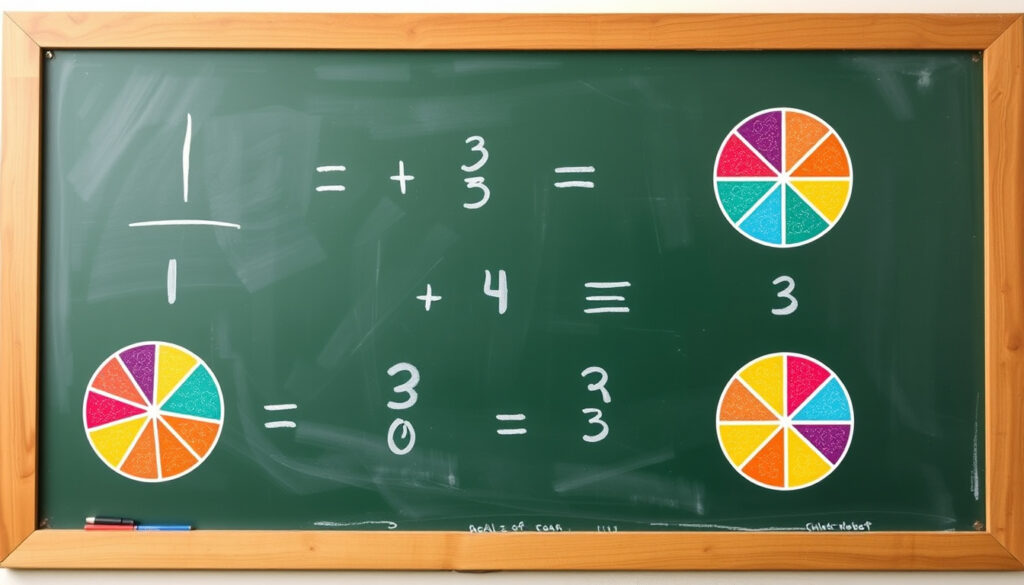
How to Multiply Fractions – Step-by-Step Guide with Examples
Multiplying fractions is a fundamental skill that appears throughout mathematics education, from elementary arithmetic to advanced algebra. Whether you are calculating recipe portions, solving word problems, or working with algebraic expressions, understanding how to multiply fractions correctly forms the backbone of many mathematical operations. This guide walks through the complete process with clear steps, practical examples, and visual resources suitable for learners of all levels.
The core principle behind fraction multiplication remains consistent regardless of the numbers involved. You multiply the numerators together and the denominators together, then simplify the result to its lowest terms. While this sounds straightforward, students often encounter challenges when working with mixed numbers, whole numbers, or fractions with identical denominators. Each scenario requires a slightly different approach that builds on this foundational rule.
How to Multiply Fractions by Whole Numbers
Multiplying a fraction by a whole number means taking multiple copies of that fraction. According to Khan Academy’s introductory resources on the topic, this operation represents adding the fraction to itself a specified number of times. The process involves converting the whole number to a fraction by placing it over 1, then applying the standard multiplication rule.
- Numerator × Numerator = New Numerator
- Denominator × Denominator = New Denominator
- Always simplify results to lowest terms
- Convert mixed numbers to improper fractions first
The steps for multiplying fractions by whole numbers follow a consistent pattern. First, convert the whole number to a fraction by writing it as the numerator with 1 as the denominator. Next, multiply the numerators together and the denominators together. Finally, simplify the result if needed, converting any improper fractions to mixed numbers.
To multiply 3/4 by 7, write 7 as 7/1, then calculate 3 × 7 = 21 for the numerator and 4 × 1 = 4 for the denominator. This gives 21/4, which converts to 5 1/4 as a mixed number. This method works reliably for any whole number, whether the fraction is greater than or less than one.
A common error involves forgetting to simplify the final answer. Always check whether the numerator and denominator share any common factors before considering the problem complete. For instance, 8/12 should be reduced to 2/3 by dividing both terms by their greatest common divisor of 4.
Key Insights for Whole Number Multiplication
- Converting whole numbers to fractions (n/1) makes the multiplication process uniform
- The fraction being multiplied retains its denominator throughout the calculation
- Simplification can occur before or after the multiplication step
- Improper results must be converted to mixed numbers for clarity
- Practice with varied denominators builds confidence and speed
- Cross-cancellation can simplify work before multiplying
| Scenario | Steps | Example |
|---|---|---|
| Proper fraction × whole number | Convert whole number, multiply numerators, simplify | 2/5 × 4 = 8/5 = 1 3/5 |
| Improper fraction × whole number | Multiply directly, then convert to mixed number | 5/3 × 6 = 30/3 = 10 |
| Cross-cancellation opportunity | Reduce before multiplying when possible | 3/4 × 8/9 = 3/4 × 8/9 = 24/36 = 2/3 |
| Multiplying by 100 | Treat 100 as 100/1, multiply numerators | 3/4 × 100 = 300/4 = 75 |
| Whole number equals denominator | Result equals the numerator directly | 7/8 × 8 = 7 |
| Unit fraction × whole number | Divide the whole number by the denominator | 1/6 × 18 = 3 |
| Multiplying multiple fractions | Multiply all numerators, then all denominators | 1/2 × 2/3 × 3/4 = 6/24 = 1/4 |
How to Multiply Mixed Fractions
Mixed fractions, also called mixed numbers, combine a whole number with a proper fraction. Multiplying mixed fractions requires an additional conversion step before the actual multiplication begins. This two-stage process ensures accuracy and helps prevent common calculation errors.
The essential first step involves converting each mixed number to an improper fraction. An improper fraction has a numerator larger than its denominator and represents the same value as the mixed number it replaced. To perform this conversion, multiply the denominator by the whole number, then add the numerator. This sum becomes the new numerator while the denominator remains unchanged.
Converting Mixed Numbers to Improper Fractions
For the mixed number 3 1/4, multiply 4 (the denominator) by 3 (the whole number), which equals 12. Add 1 (the numerator) to get 13. The result, 13/4, represents the same value as 3 1/4. This conversion follows a reliable formula: (denominator × whole number) + numerator, all divided by the original denominator.
Once both mixed numbers convert to improper fractions, apply the standard multiplication rule. Multiply the numerators together and the denominators together. After obtaining the product, check whether simplification is needed and convert any improper result back to a mixed number.
- Convert each mixed number to an improper fraction
- Multiply the numerators together
- Multiply the denominators together
- Simplify the result by reducing to lowest terms
- Convert improper results to mixed numbers if needed
Working through 3 1/4 × 2/5 demonstrates this process clearly. First, convert 3 1/4 to 13/4 by calculating (4 × 3) + 1 = 13 over the original denominator of 4. Next, multiply 13/4 by 2/5, giving 26/20 when multiplying the numerators (13 × 2 = 26) and denominators (4 × 5 = 20). Finally, simplify 26/20 by dividing both terms by 2, resulting in 13/10, which converts to the mixed number 1 3/10.
This method applies equally well when multiplying mixed numbers by fractions or other mixed numbers. The key principle remains consistent: convert, multiply, simplify, and convert back if necessary. Educational platforms like YouTube tutorials demonstrate these steps with visual examples that reinforce the mathematical reasoning behind each stage.
How to Multiply Fractions with the Same Denominators
When multiplying fractions that share the same denominator, the process does not change despite what some students might expect. The rule remains straightforward: multiply the numerators together and the denominators together. The denominator of the result will be the original denominator squared, though subsequent simplification typically reduces this.
For example, multiplying 2/5 by 3/5 yields 6/25 (since 2 × 3 = 6 and 5 × 5 = 25). While this result cannot be simplified further because 6 and 25 share no common factors, other same-denominator problems may require reduction. Consider 4/7 × 2/7 = 8/49, which also cannot be simplified because 8 and 49 have no common factors other than 1.
A useful shortcut emerges when one numerator divides evenly into the other’s denominator. In 3/8 × 4/9, the 4 in the numerator and 8 in the denominator share a common factor of 4. Cross-cancelling before multiplication (reducing 4/8 to 1/2) produces 3/2 × 1/9 = 3/18, which simplifies to 1/6. This technique reduces larger numbers and makes calculations more manageable.
Understanding Why the Rule Works
The area model explanation from Khan Academy helps students understand the conceptual basis for fraction multiplication. When you multiply fractions, you are finding a part of a part. Visual models represent this as overlapping regions where the intersection represents the product. The numerator multiplication finds the size of that intersection relative to the unit square, while the denominator multiplication establishes the total number of equal parts being considered.
This geometric interpretation aligns perfectly with the algorithmic rule. Whether using visual models or numerical calculations, the result remains identical, confirming that the numerator-times-numerator and denominator-times-denominator approach captures the mathematical relationship accurately.
- Adding denominators instead of multiplying them
- Forgetting to simplify the final answer
- Incorrectly converting mixed numbers
- Skipping cross-cancellation opportunities
- Leaving improper results in fraction form when mixed numbers are clearer
How to Multiply Fractions Video
Visual learning resources offer valuable support for students mastering fraction multiplication. Educational video tutorials provide step-by-step demonstrations that break down each process into manageable stages. These resources prove especially helpful for visual learners and those who benefit from seeing problems worked through in real time.
Video resources cover various scenarios, including multiplication by whole numbers, fraction-by-fraction multiplication, and mixed number operations. Platforms like YouTube educational channels and Khan Academy offer content specifically designed for different age groups and skill levels.
For younger learners or those seeking simplified explanations, several videos focus on making fraction multiplication accessible and engaging. These resources use animations, visual models, and relatable examples to explain the underlying concepts. The step-by-step fraction multiplication tutorials demonstrate the complete workflow from problem setup through final simplification.
Converting Improper Fractions to Mixed Numbers
When multiplication produces an improper fraction where the numerator exceeds the denominator, conversion to a mixed number provides a more intuitive result. The process involves dividing the numerator by the denominator to find the whole number part, then expressing any remainder as a fraction with the original denominator.
The fraction 30/20 illustrates this conversion. Dividing 30 by 20 yields 1 with a remainder of 10. The quotient (1) becomes the whole number, and the remainder (10) becomes the numerator of the fractional part, keeping 20 as the denominator. This gives 1 10/20, which simplifies to 1 1/2 by dividing both the numerator and denominator of the fractional part by 10.
This conversion skill connects directly to the mixed number multiplication process. After multiplying and obtaining an improper result, dividing the numerator by the denominator restores the mixed number format when appropriate. Educational video demonstrations walk through these conversions with clear explanations of each step.
The Step-by-Step Multiplication Process
Understanding the sequence of operations in fraction multiplication helps build lasting mathematical fluency. The following steps provide a reliable framework applicable to any fraction multiplication problem.
- Assess the problem type: Determine whether you are multiplying fractions, whole numbers, or mixed numbers
- Convert as needed: Change whole numbers to fractions (n/1) or mixed numbers to improper fractions
- Check for simplification opportunities: Cross-cancel any common factors between numerators and denominators
- Multiply the numerators: Calculate the product of all numerators to find your new numerator
- Multiply the denominators: Calculate the product of all denominators to find your new denominator
- Simplify the result: Reduce the fraction to lowest terms by dividing by the greatest common divisor
- Convert if necessary: Change improper fractions to mixed numbers for a cleaner final answer
This systematic approach applies consistently across different problem types. Whether students encounter straightforward fraction multiplication or more complex scenarios involving mixed numbers, following these steps ensures accurate results.
What Is Certain and What Requires Practice
The mathematical rules governing fraction multiplication are well-established and universally consistent. No exceptions exist to the numerator-times-numerator and denominator-times-denominator rule. Simplification requirements apply in all cases where common factors exist between numerator and denominator.
| Established Information | Skills Requiring Practice |
|---|---|
| Multiplication rule: multiply numerators, multiply denominators | Identifying opportunities for cross-cancellation |
| Conversion formula for mixed numbers | Finding the greatest common divisor quickly |
| Simplification requirement applies universally | Mental arithmetic with larger numbers |
| Cross-cancellation reduces work before multiplying | Converting between improper fractions and mixed numbers |
The Conceptual Foundation
Fraction multiplication represents one of the most important operations in mathematics because it extends the concept of repeated addition to situations where the results fall between whole numbers. Understanding why the multiplication rule works, rather than simply memorizing it, provides students with flexibility to handle unfamiliar problems and builds stronger mathematical intuition.
The area model approach, as explained by educational resources from Khan Academy, frames multiplication as finding a fractional part of a fractional amount. When 1/2 is multiplied by 1/3, the result represents half of a third, which equals one-sixth of the whole. This interpretation matches the algorithm exactly and helps explain why denominators multiply rather than add.
Beyond academic mathematics, fraction multiplication appears throughout everyday contexts. Cooking measurements often require scaling recipes up or down using fractional amounts. Construction and crafting projects frequently involve calculating dimensions expressed as fractions. Financial calculations and statistical work also rely on these fundamental operations.
Sources and Expert Guidance
The methods presented in this guide draw from established educational resources recognized for their mathematical accuracy and pedagogical effectiveness. According to BBC Bitesize, fraction multiplication follows a consistent rule regardless of whether the fractions have matching or different denominators, and simplification should always be the final step.
When you multiply two fractions together, you’re taking a part of a part, and the result is a new fraction that represents a different part of a whole.
— Khan Academy, Multiplying Fractions Introduction
Additional authoritative resources from Third Space Learning provide detailed examples and practice worksheets that reinforce these concepts through varied problem sets. These educational platforms emphasize that understanding the underlying reasoning supports long-term retention more effectively than procedural memorization alone.
Summary
Multiplying fractions follows a consistent three-step process: multiply the numerators, multiply the denominators, and simplify the result. Whole numbers convert to fractions by placing them over 1 before multiplication. Mixed numbers require conversion to improper fractions before the multiplication step, followed by reconversion to mixed number format if the answer is improper.
Cross-cancellation provides a valuable shortcut that reduces the size of numbers before multiplication, though it never changes the final answer. Visual resources and video tutorials offer additional support for learners who benefit from seeing these processes demonstrated. With practice, fraction multiplication becomes automatic and reliable.
For related mathematical operations, understanding how to multiply fractions builds directly into proficiency with fraction division and addition. These interconnected skills form a foundation for more advanced mathematical concepts encountered in algebra, calculus, and beyond. Those interested in measurement conversions may find 1/4 Cup in mL helpful for practical fraction application.
How do you multiply fractions with variables?
The process remains identical when variables appear in numerators or denominators. Multiply the variable expressions together, then simplify by canceling any common factors. For example, (3x/4) × (2/5) = 6x/20, which simplifies to 3x/10.
How do you divide fractions?
To divide fractions, multiply by the reciprocal of the divisor. Flip the second fraction upside down (swap numerator and denominator), then multiply the fractions normally. Finally, simplify the result. This process transforms division into multiplication, which follows the standard rules.
How do you add fractions?
Unlike multiplication, adding fractions requires common denominators. Find the least common denominator, convert each fraction, then add the numerators while keeping the denominator the same. Simplify the result if possible. Mixed number addition also requires combining whole number parts separately.
Can you multiply fractions with different denominators?
Yes, denominators do not need to match when multiplying fractions. The rule applies uniformly: multiply all numerators together and all denominators together, regardless of whether they are the same or different. Having matching denominators only affects addition and subtraction operations.
What is cross-cancellation in fraction multiplication?
Cross-cancellation involves reducing fractions before multiplying by canceling common factors between any numerator and any denominator. For 4/9 × 3/8, the 4 and 8 share a factor of 4, while 3 and 9 share a factor of 3. Reducing first gives 1/3 × 1/2 = 1/6, which equals the unreduced product 12/72.
How do you multiply fractions by 100?
Write 100 as 100/1, then multiply the numerators (fraction numerator × 100) and denominators (fraction denominator × 1). For 3/4 × 100, calculate 3 × 100 = 300 for the numerator and 4 × 1 = 4 for the denominator, giving 300/4 = 75.
More related posts
 UEFA Nation League Standing – Live Table & Full Guide
 Rachel Riley – Biography, Husband, IQ, Height & More
 Electric Bikes for Sale – Best UK Deals Near You
 Exeter City vs Nottm Forest – Final Score, Lineups, Highlights
 Amanda Abbington – Sherlock Star, Strictly Contestant & Partner
 Under the Banner of Heaven – True Story, Cast and Complete Guide
 Barclays Share Price Today – Live NYSE LSE Quotes and Analysis
 Kebabs Shami Near Me – Best Places, Menu and Delivery Guide
